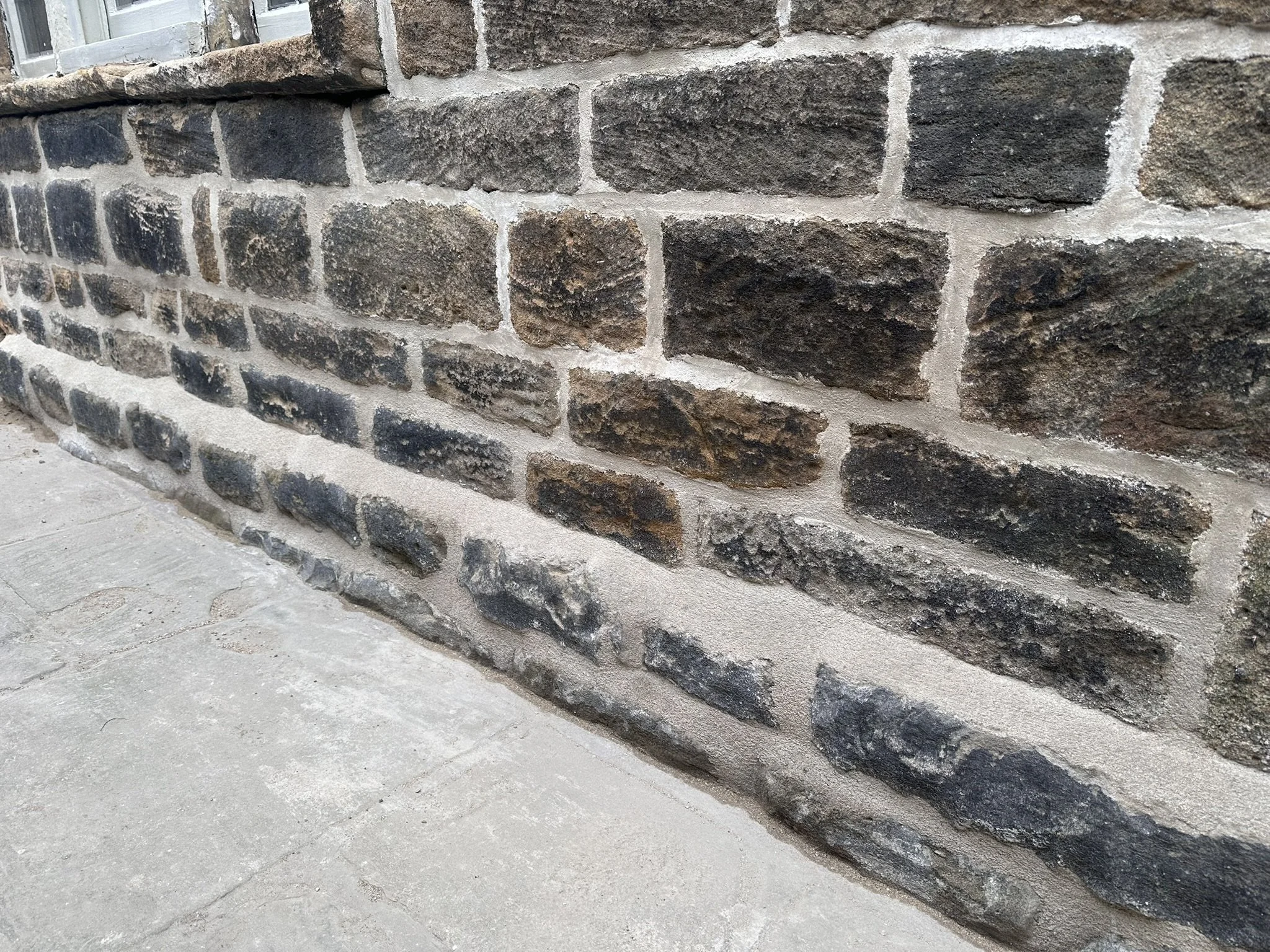
Is hot mixed lime mortar suitable for my building?
In most cases, yes. If your property was built before the early 20th century and is constructed in stone or traditional brick, hot mixed lime mortar is usually the most compatible and appropriate choice.
We assess each building individually, considering age, exposure, masonry type, and existing mortars before recommending a specific approach.
How deep do you rake out the joints?
Failed mortar is removed to a sufficient depth to ensure the new lime mortar can bond and perform properly.
As a general principle, this is to the depth that allows successful contact with the original lime bedding mortar.
Casual cosmetic surface repointing is avoided.
How long will lime pointing last?
When correctly designed and applied, lime mortar can last many decades. It is intended to weather gently and act as a sacrificial element, protecting the surrounding stone or brick.
Future maintenance is straightforward and far less damaging than repairing masonry harmed by cement.
How long will the work take?
Timescales depend on the size of the area, access, weather conditions, and the condition of the existing mortar.
Lime work cannot be rushed, and allowances are made for curing and protection. A realistic programme is discussed before work begins.
Do you work on listed or historic buildings?
Yes. We only work on historic properties and understand the principles of conservation and traditional construction.
Our approach is based on compatibility, reversibility, and respect for original fabric.
How much does hot mixed lime pointing cost?
Costs vary depending on access, joint depth, masonry condition, and exposure. Lime pointing is more labour-intensive than cement work, but it protects the building fabric and avoids costly future repairs.
Quotations are provided following a site assessment so they accurately reflect the work required.
Frequently Asked Questions
How do you decide on the correct mortar for my property?
We do not use a standard mix. The mortar is designed specifically for your building based on site inspection, masonry type, joint width, exposure, and the appearance of any original or surviving historic mortar.
Aggregate type, grading, and colour are selected to ensure the finished work sits comfortably with the existing fabric.
Will the new pointing match the existing appearance?
Yes. Care is taken to match colour, texture, aggregate size, and joint profile.
Where appropriate, sample areas can be prepared before proceeding.
Lime pointing should look natural and settled, not crisp or newly manufactured.
Will lime pointing help with damp issues?
Lime mortar improves breathability and allows moisture to evaporate through the joints rather than becoming trapped in the masonry. This often leads to a noticeable improvement in moisture behaviour.
However, lime pointing is not presented as a cure-all, and other factors such as drainage, ground levels, and ventilation may also need consideration.
Is lime pointing weather dependent?
Yes. Lime mortar requires suitable conditions to cure properly. Work is not carried out in frost, heavy rain, or extreme heat.
Where necessary, the work is protected with hessian or similar materials to ensure controlled curing.
Are you insured?
Yes. We hold appropriate public liability insurance and operate in a professional and considered manner.
Details can be provided on request.
Why use hot mixed lime rather than bagged NHL lime?
Hot mixed lime mortar offers excellent workability, bond, and compatibility with historic masonry. It reflects traditional practice and performs well when correctly made and applied.
We use it because it is appropriate, historically accurate and naturally the best choice for heritage properties.
Do you rake out joints by hand or use power tools?
Raking out is carried out by hand as standard. This allows precise control and avoids damage to the stone arrises.
Mechanical tools are not appropriate for historic masonry and can cause irreversible harm. Our approach prioritises protection of the original stone above speed.
What joint finish will you use?
The joint finish is chosen to suit the building and its historic character. This may be flush or gently brushed back.
The aim is always to support the masonry visually and structurally, rather than impose a uniform modern finish.
What does the process involve?
The process typically includes:
Careful assessment and preparation
Hand raking out of failed mortar
Pre-wetting of the masonry
Application of hot mixed lime mortar
Controlled curing and protection
Each stage is carried out methodically and with respect for the building.
Will the work be disruptive?
There will be some noise and dust during raking out, but disruption is kept to a minimum. Surrounding areas are protected, and the site is kept tidy throughout.
We aim to work considerately, particularly on occupied properties.
Do you provide a guarantee?
We stand by the quality of our workmanship. Lime mortar is a traditional, breathable material, and its performance depends on correct application and appropriate maintenance.
We are always happy to discuss aftercare and long-term expectations openly.
Why choose Dovetail Heritage?
We focus on doing things properly, not quickly. Our work is rooted in an understanding of historic buildings, traditional materials, and careful craftsmanship.
We aim to leave buildings better than we found them, with work that will age quietly and naturally over time.
Incompatible cement pointing
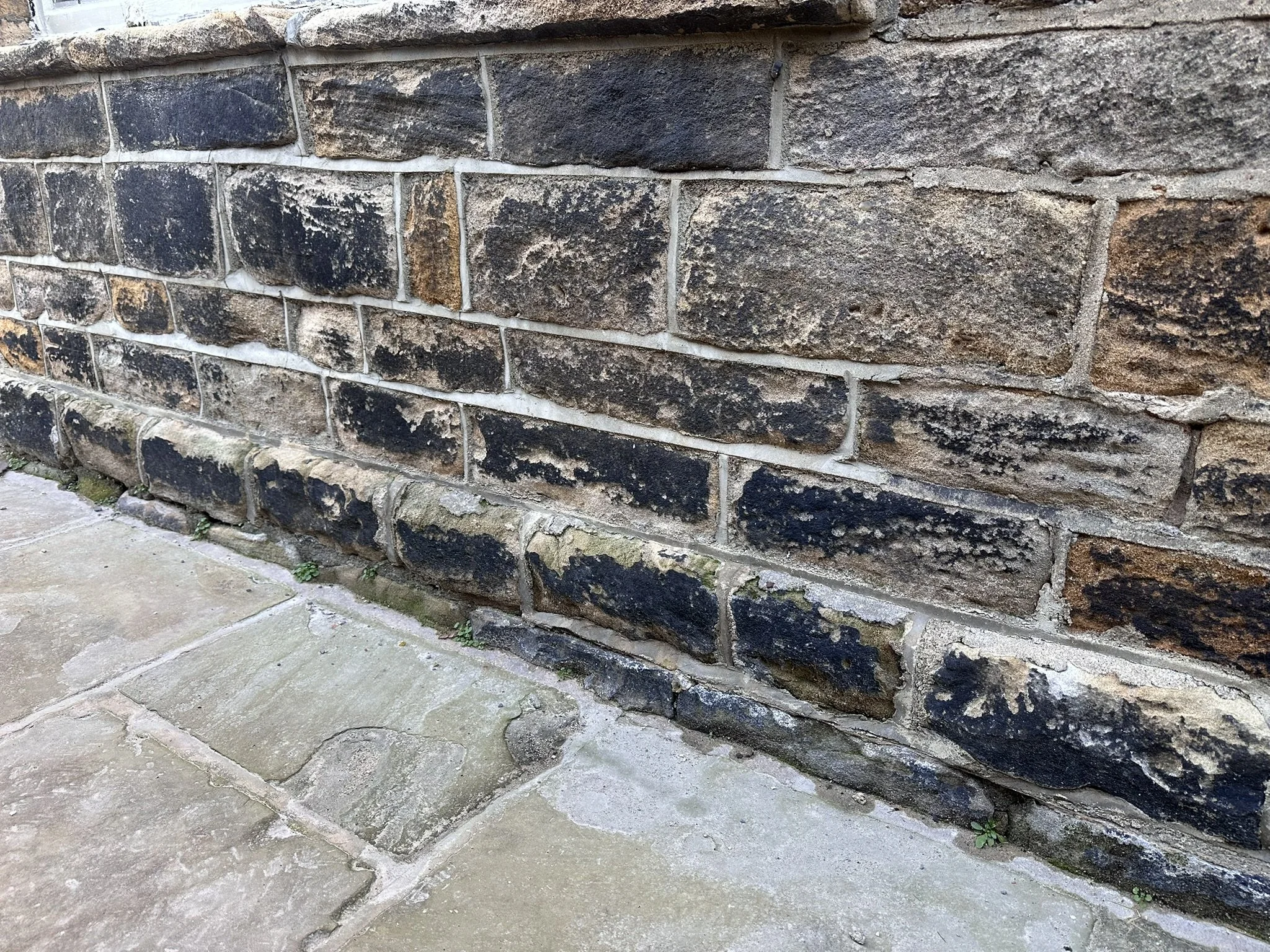
Traditional Hot Mixed Lime Pointing